Quetta, Balochistan: Pakistan’s Counter Terrorism Department (CTD) in Balochistan has claimed to have killed five alleged militants during an intelligence-based operation in the Dasht area of Mastung district on January 19, 2026.
According to CTD officials, the individuals were affiliated with the proscribed Baloch Liberation Army (BLA). They were allegedly planning to block the Quetta–Sibi highway and carry out attacks on security forces.
In an official statement, the CTD said weapons, hand grenades, and motorcycles were recovered from the site of the operation, describing the incident as a successful counterterrorism action.
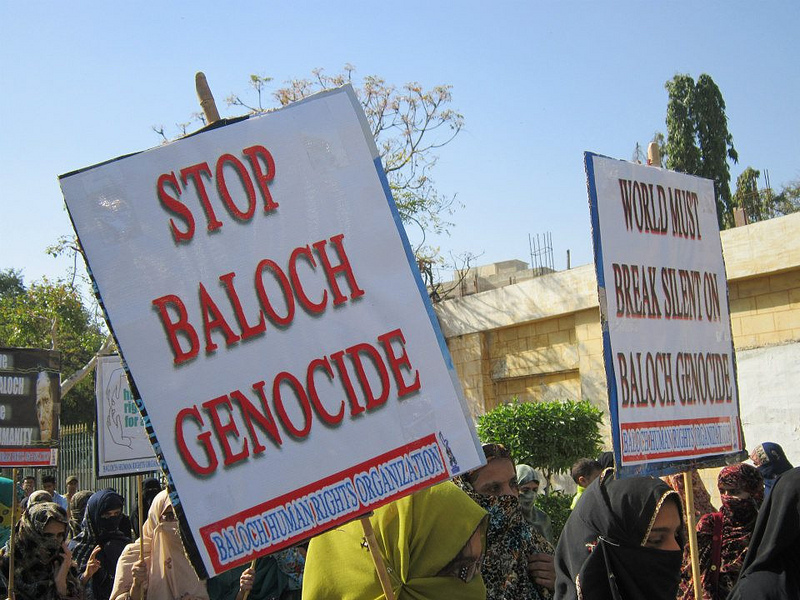
However, the official narrative has been strongly contested by Baloch rights activists, families of missing persons, and multiple human rights organisations, who have rejected the CTD’s claims and described the incident as a “fake encounter.”
Groups including the Baloch Yakjehti Committee (BYC), Voice for Baloch Missing Persons (VBMP), the human rights wing of the Baloch National Movement (Paank), and the Human Rights Council of Balochistan (HRCB) allege that the killings are part of a long-standing pattern of extrajudicial executions in Balochistan.
According to these organisations, individuals who had previously been forcibly disappeared are killed while in custody and later portrayed as militants. They describe this practice as a continuation of the “kill and dump” policy by Pakistani forces.
Human rights groups further added that one of those killed in the Mastung operation was Aslam son of Kunar Khan, whose enforced disappearance had been documented and reported earlier. Aslam’s case had received media attention after reports emerged that he was detained during a search operation in Quetta’s Hazarganji area in January 2025.
At the time, reports stated that Aslam, a resident of the Narmuk area in Kalat district, had travelled to Hazarganji to sell agricultural produce when he was taken into custody and transferred to an unknown location. Eyewitness accounts and details of his disappearance were published by local media and remain publicly accessible.
The resurfacing of Aslam’s name among those killed in the Mastung encounter has raised serious questions about the CTD’s account of events. Human rights organisations argue that this discrepancy undermines the credibility of official claims and points toward the possibility of an extrajudicial killing.
Activists have called for an independent and transparent investigation into the incident and have urged authorities to immediately end the practice of enforced disappearances and extrajudicial killings in Balochistan.
Rights groups also note that this is not an isolated case. They emphasise that in the past, Baloch political activists who were already in detention or had been forcibly disappeared were later killed in staged encounters, particularly following major attacks in which Pakistani security forces suffered casualties. According to these groups, such incidents are widely viewed as acts of retaliation, raising serious concerns about accountability and the rule of law in Balochistan.

 Voice of Baluchistan